
Quiet Supersonic Flight: A brief history
Concorde, with the iconic bent nose proved the practicality of supersonic flight to mankind. However, their problems came with sonic boom and the "BOOM" that accompanied it.
The Physics of a Sonic Boom
Sound travels through air as pressure disturbances at approximately 343 m/s at 20°C. When an aircraft exceeds the local speed of sound, these disturbances can no longer propagate ahead of it, producing shock waves that spread through the atmosphere. This is what creates a loud boom, which we call a sonic boom
The Mach number describes this relationship:
M = V/a
where (V) is aircraft speed and (a) is the local speed of sound. At Mach 2, an aircraft travels at twice the local speed of sound. The resulting shock-wave pattern depends on a multitude of factors such as its geometry, altitude and weather.
Concorde: Rise and Fall
Concorde entered commercial service in 1976, cruising at approximately Mach 2 and around 60,000 feet. Its slender fuselage, ogival delta wing, and powerful Rolls-Royce/Snecma Olympus engines were designed around the demands of sustained supersonic flight.
But speed came at a cost. Aerodynamic drag and the need to maintain high-speed performance required enormous amounts of fuel. Its iconic sonic boom quickly became the annoyance of many, causing them to be banned from flying over land. Eventually Concorde fell through in 2003 from the expensive flights and restrictions.
Can the Sonic Boom be avoided?
The answer is in controlling shock waves. By carefully shaping the plane, engineers can distribute pressure changes along the aircraft so that they combine less abruptly before reaching the ground.
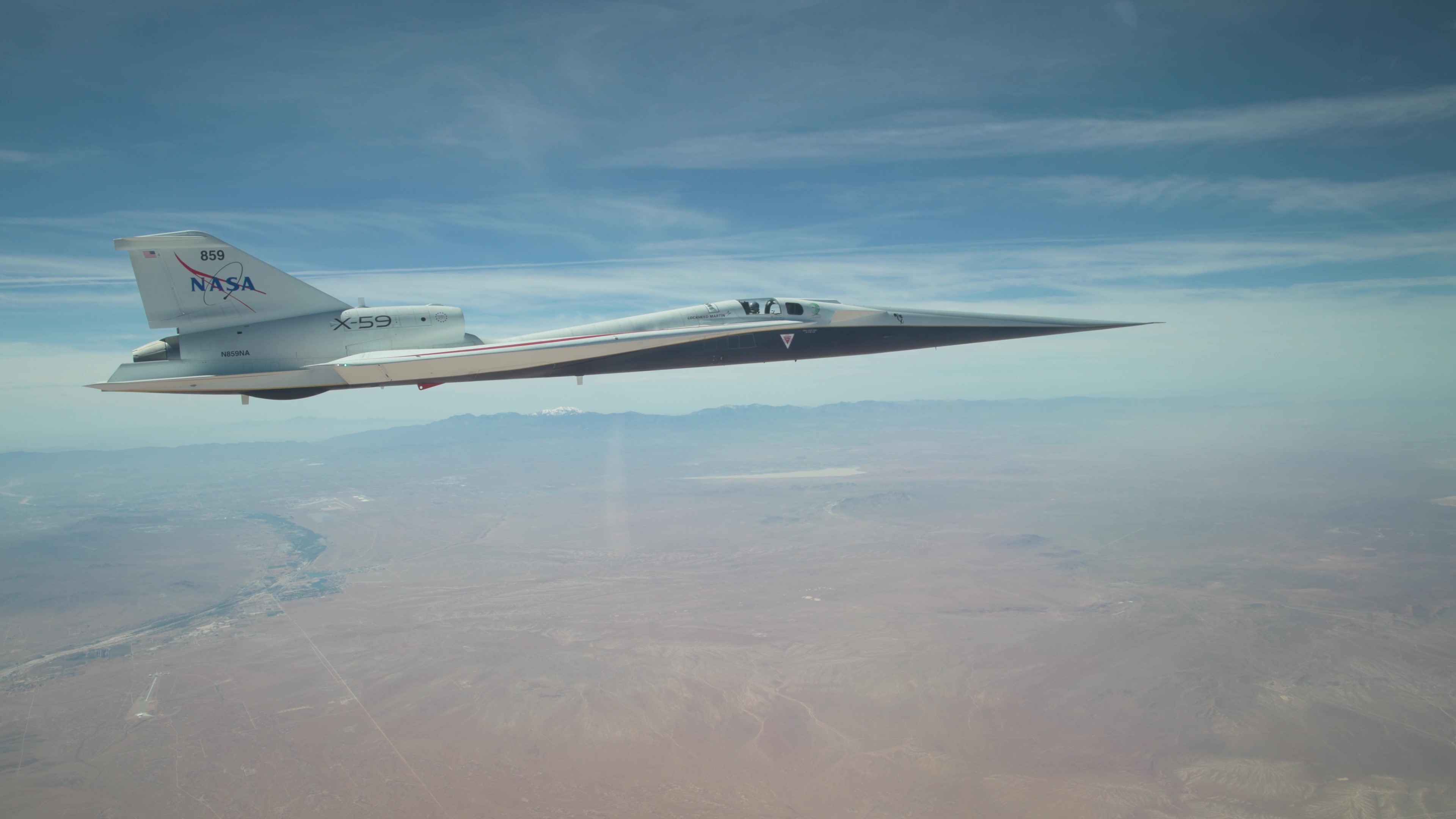
This is the principle behind modern research, including NASA's X-59. Unlike Concorde, which was designed primarily to achieve commercially useful supersonic performance, the X-59 is an experimental aircraft made to investigate how a well designed pressure signature affects the sound heard below.
The Challenge Ahead
Reducing the boom does not automatically make supersonic travel efficient. Problems of fuel, engine efficiency and emissions still hold supersonic travel back. Quieter booms may relax the ban and allow a return to commercial use, but that depends on measured results and the noise standards of different countries.
Concorde demonstrated what supersonic passenger travel could achieve. They now have to make it quieter, cheaper and more efficient.