
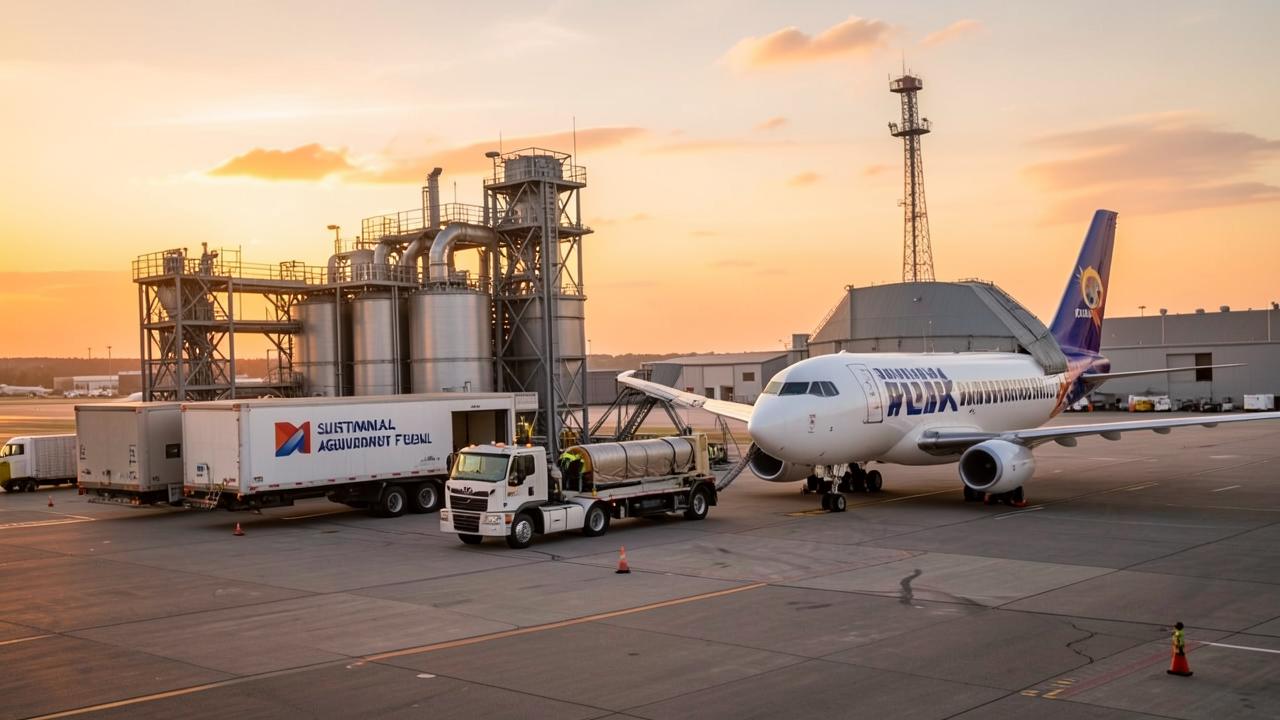
Sustainable aviation fuel is the least glamorous and most immediately useful decarbonisation lever in aviation. It is a drop-in liquid: existing engines, existing pipelines, existing wing tanks. The problem has never been the chemistry, it is volume.
The production pathways
HEFA — hydrotreated fats and oils — supplies the overwhelming majority of SAF today and is close to its feedstock ceiling. Alcohol-to-jet, gasification with Fischer-Tropsch synthesis, and power-to-liquid e-fuels made from captured carbon dioxide and green hydrogen all scale far higher but cost more per litre and need cheap renewable electricity.
Blend limits are lifting
Certification today caps most blends at 50 percent. Engine and airframe makers have been running 100 percent SAF test campaigns for several years, and the aromatics question — the compounds that keep seals swollen and contrails dirty — is the last technical gate before fully synthetic fuel is approved.
Book-and-claim and the trust question
Because fuel is fungible, most corporate SAF purchases are accounted for rather than physically uplifted. That is efficient, but it makes rigorous certification and registry design as important as refinery capacity. Expect auditing standards to be the SAF story of the next two years.
The honest outlook
SAF will not be cheap this decade, but it is the only lever that reduces emissions from the aircraft already flying — and those aircraft will still be flying in 2045.