
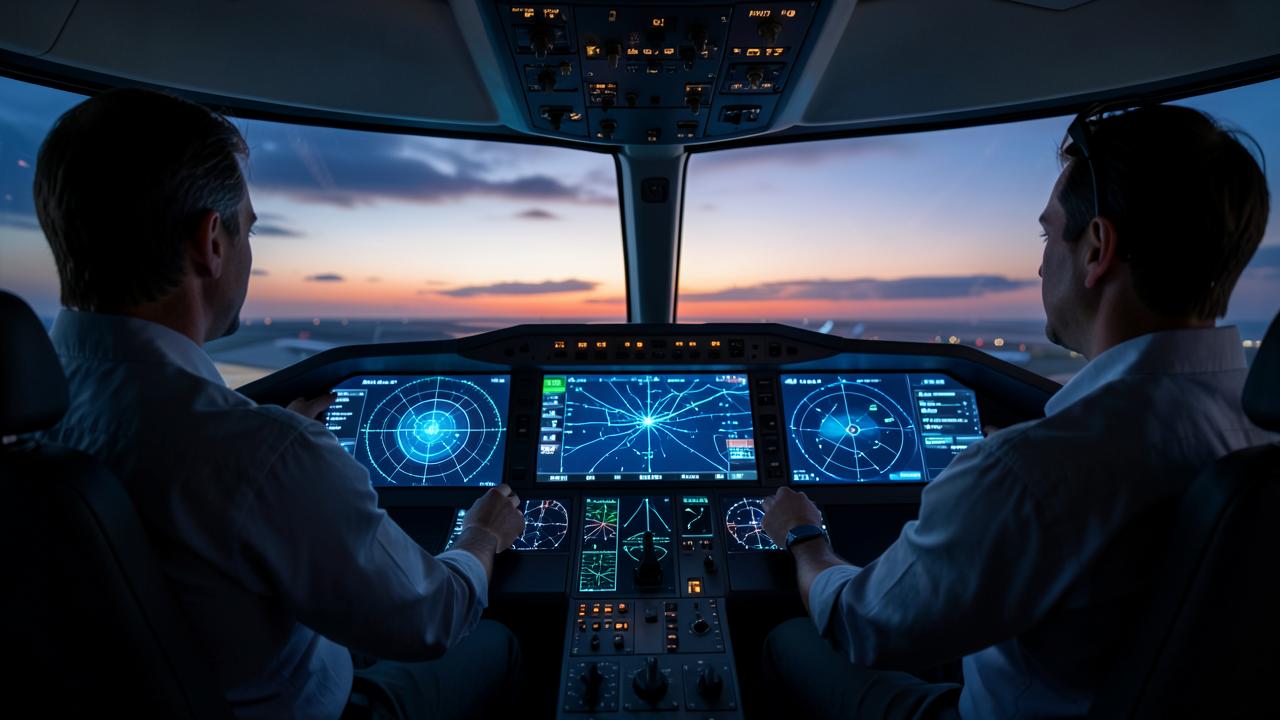
Ask what artificial intelligence is doing in aviation and the honest 2026 answer is: an enormous amount, almost none of it flying the aeroplane. Certification standards demand deterministic, explainable behaviour from anything in the control loop, so learning systems have entered the flight deck as advisors.
Where it is already deployed
Trajectory optimisation engines recompute cruise altitude and speed against live winds and traffic, typically saving one to three percent of block fuel. Vision systems flag runway incursions and give taxi guidance at unfamiliar airports. Voice transcription of controller instructions reduces read-back errors. Onboard anomaly detection compares thousands of parameters against a fleet baseline and calls out drift long before a threshold trips.
Reduced-crew operations
The commercially interesting frontier is single-pilot cruise on long-haul freighters, where an automated system covers the rest period. That requires provably safe automatic diversion and landing, plus a ground-station concept. Regulators are cautious, and rightly so.
The certification bottleneck
Learning assurance frameworks now define how training data, model boundaries and monitoring must be documented. It is slow and unfashionable work, and it is what determines whether a promising demo ever carries passengers.
What changes for crews
Less scanning, more supervising. The skill that matters is knowing when the advisory system is confidently wrong.