
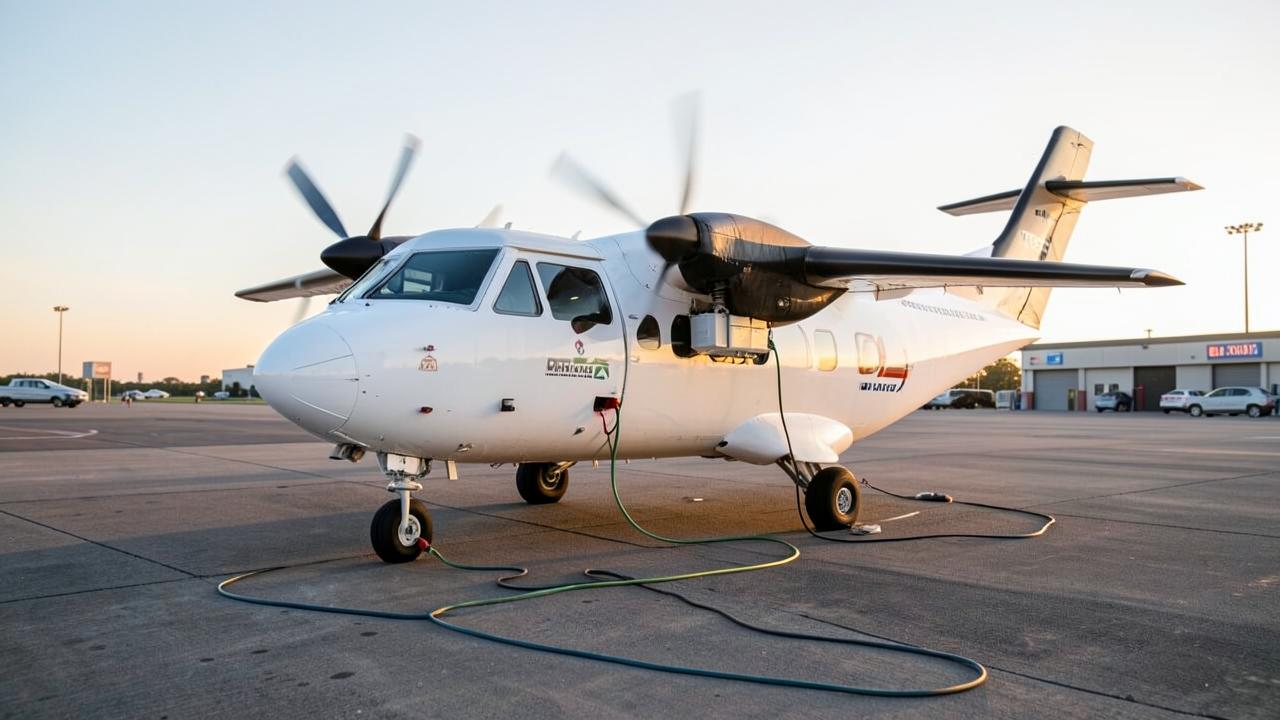
Battery-electric aviation spent years being either over-hyped or dismissed. In 2026 it occupies a narrow but genuinely useful niche: nine to nineteen seat commuter aircraft flying stage lengths under 400 kilometres with reserves.
The number that decides everything
Certified aviation packs today deliver roughly 250 to 300 watt-hours per kilogram at cell level, and noticeably less once cooling, structure and safety margins are added. Jet fuel offers around 12,000. Electric motors claw much of that back with 90-plus percent efficiency versus about 40 percent for a turbine, but the gap still caps range rather than payload economics.
Where the economics already work
Energy cost per seat-kilometre can fall by half or more on short routes, and maintenance drops sharply because a motor has one moving part where a turboprop has thousands. Island hops, mountain shuttles, feeder routes into hubs and pilot-training fleets are the natural first customers.
Hybrids as the bridge
Series and parallel hybrid architectures use a small turbogenerator for cruise and battery power for takeoff, cutting fuel burn 20 to 40 percent without a range penalty. Most regional programmes now treat hybrid as the product and full electric as the version that arrives with the next battery chemistry.
What to watch next
Solid-state and lithium-sulphur cells promise 400 to 500 watt-hours per kilogram. Each 100 watt-hour step adds meaningful range, so the aircraft do not need reinventing — the packs are designed to be swapped as chemistry improves.