
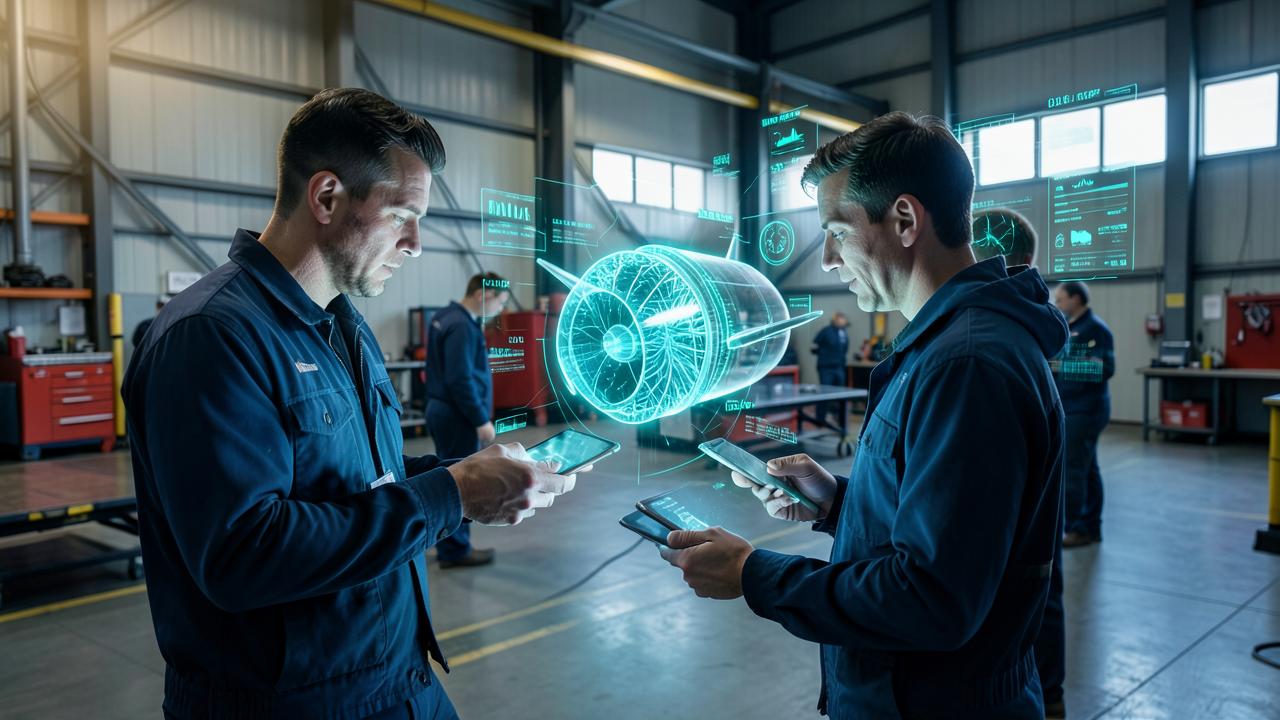
An unscheduled removal is the most expensive event in an airline''s technical operation: a grounded aircraft, a scrambled crew, a rebooked cabin. Predictive maintenance exists to convert those surprises into planned work at a base with the part in stock.
What a digital twin actually is
Not a pretty 3D model. A twin is a calibrated physics model of a specific serial-numbered component, continuously updated with that unit''s own sensor history — exhaust gas temperature margin, vibration spectra, oil debris counts, actuator response times. It estimates remaining useful life for this engine, not for the fleet average.
The data pipeline
Quick access recorder data, engine health streams and cabin system logs are offloaded over airport wireless, cleaned, aligned to flight phase, and fed to models that flag degradation trends. A single widebody flight can produce tens of gigabytes when full-rate sensing is enabled.
Measured results
Mature programmes report significant reductions in unscheduled removals and delay minutes, plus longer on-wing life because parts are replaced on evidence rather than on calendar limits. Spares pooling becomes forecastable, which frees working capital.
Where it goes next
Structural twins that track fatigue on individual airframes, and additive manufacturing that prints a predicted-need part close to the base that will fit it.