
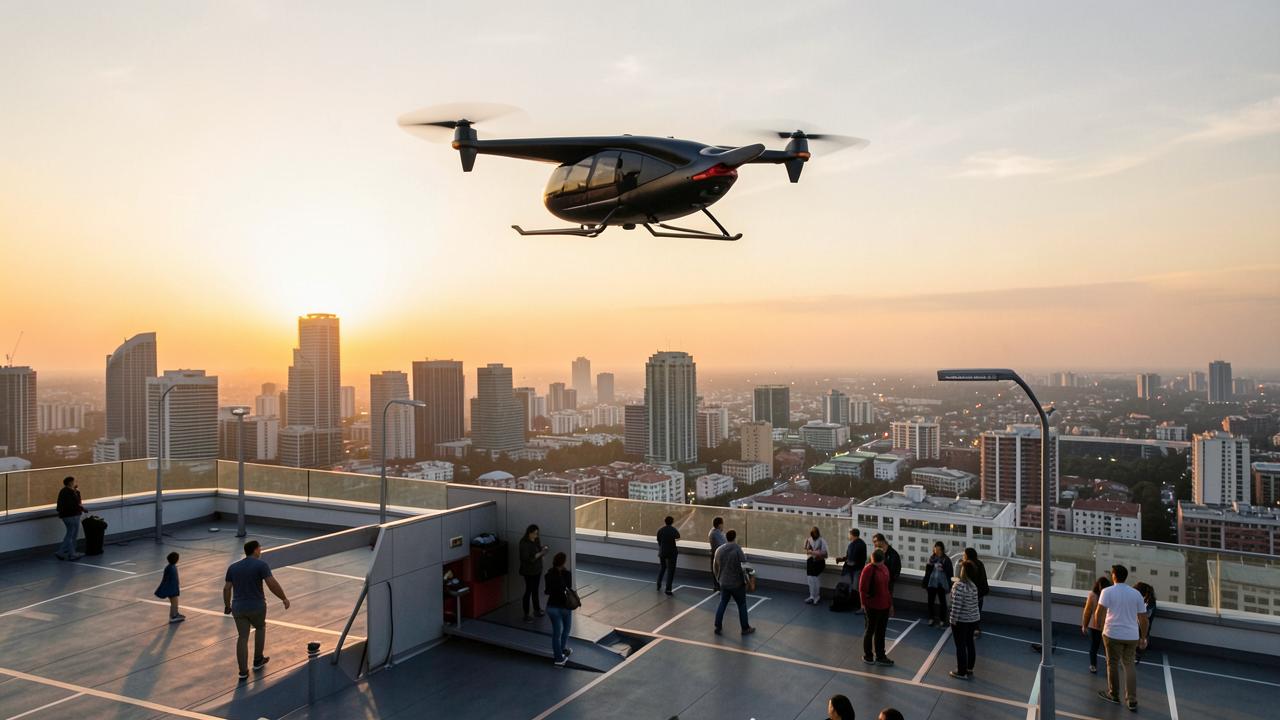
Advanced air mobility spent the early 2020s raising money and the mid-2020s doing paperwork. In 2026 the leading electric vertical takeoff and landing programmes are deep in type certification, flying full transition profiles with pilots on board, and negotiating slots at their first vertiports.
The engineering compromise
A vector-thrust eVTOL must hover — which wants huge disc area and enormous power — and cruise efficiently — which wants a wing and small propellers. Tilt-rotor and lift-plus-cruise layouts each pick a side. Hover consumes power at three to five times cruise rate, so battery reserve rules, not cruise range, shape the mission.
Noise is the licence to operate
Distributed electric propulsion lets designers spin many small rotors slowly, cutting perceived noise well below a helicopter. That is the difference between city-centre approval and a suburban-only network.
Vertiports and traffic management
Charging power, passenger throughput, approach path deconfliction and weather minima are the real constraints on daily flights. Digital traffic management services that hand off corridors between operators are being trialled in parallel with the aircraft.
How the first years will look
Airport shuttles at premium fares with a pilot on board, on fixed routes, in good weather. Volume, price reduction and eventual autonomy follow only if utilisation and safety records hold.