
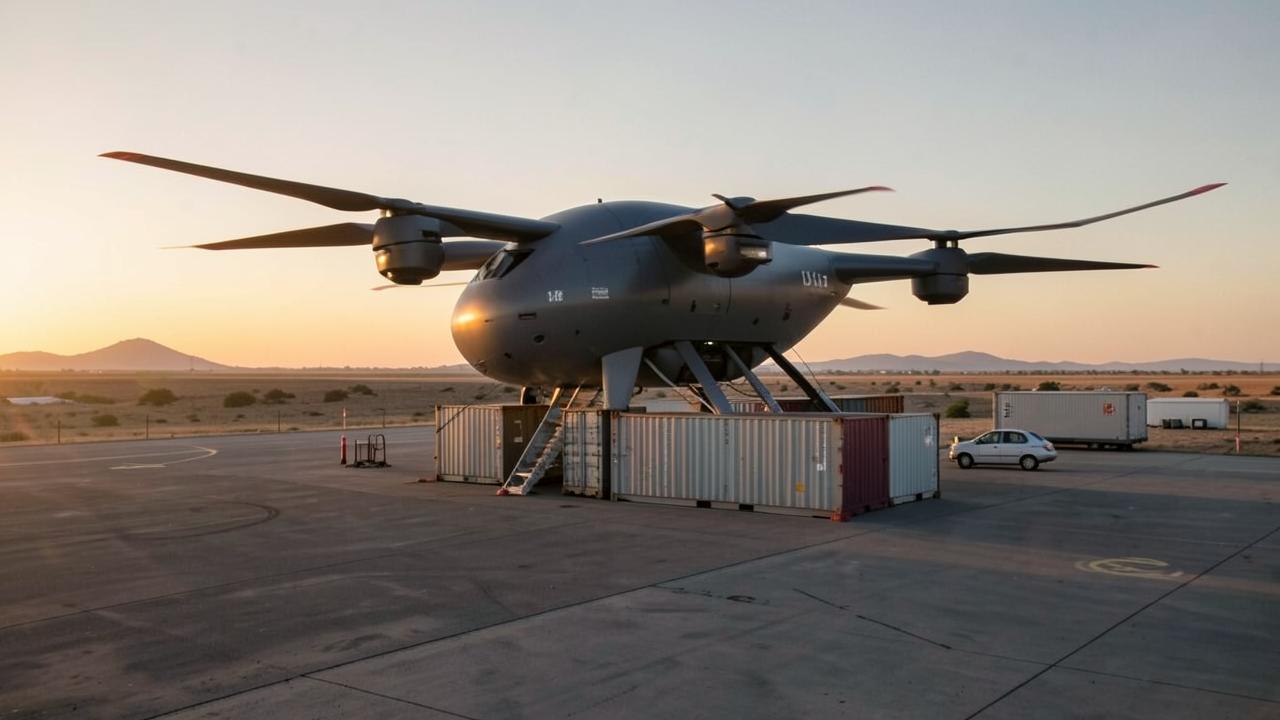
If autonomy is going to arrive in commercial aviation, it will arrive in the cargo hold first. Freight has no passengers to convince, operates at night into quiet airfields, and suffers most from crew scarcity on thin routes.
Two product shapes
Purpose-built large uncrewed aircraft carrying one to two tonnes into unimproved strips are targeting mining, island logistics and humanitarian supply. Separately, retrofit autonomy kits on existing light freighters offer a certification path built on a known airframe.
The technology stack
Detect-and-avoid using radar and electro-optical sensors, automatic emergency landing site selection, redundant satellite and cellular command links, and a ground control station where one operator supervises several aircraft. Contested or lost-link behaviour must be provably safe, which is where most programmes spend their engineering budget.
Regulation is the schedule
Operating an uncrewed aircraft above 25 kilogrammes in controlled airspace requires special conditions today. Certification frameworks are maturing, and early approvals are route-specific and corridor-limited rather than general.
The economics
Removing crew removes a large slice of trip cost on short sectors and, crucially, removes the duty-time limits that make thin overnight routes impossible to staff. That is why the freight case closes before the passenger one.