
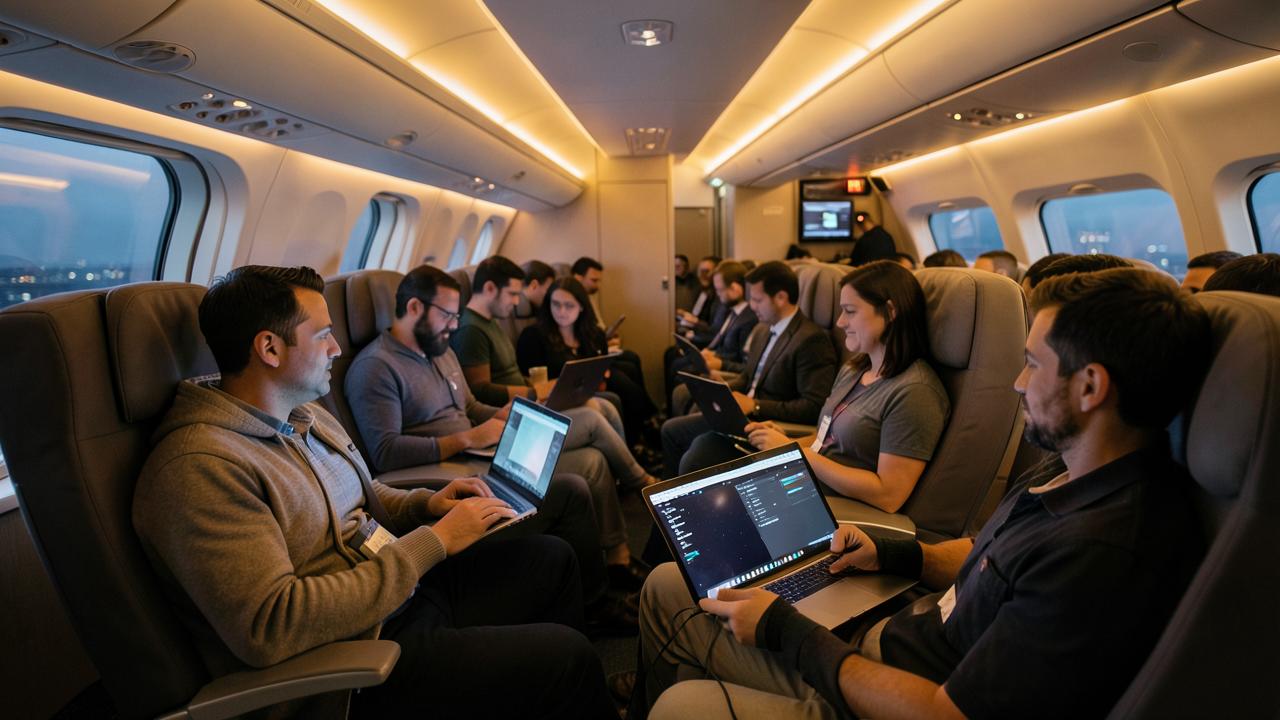
Inflight connectivity used to mean a geostationary satellite 36,000 kilometres away, 600 milliseconds of latency and a browsing experience nobody enjoyed. Low-earth-orbit constellations sit a few hundred kilometres up, cutting latency to tens of milliseconds and pushing hundreds of megabits to a single aircraft.
The hardware change
Electronically steered flat-panel antennas replaced mechanically gimballed dishes. They are lighter, lower drag, and can track multiple satellites during handover, which is what makes a constellation usable at 900 kilometres per hour.
Why airlines now give it away
Free connectivity increases loyalty programme sign-ups and lets the cabin become a streaming and retail surface without a heavy seatback screen fleetwide. Removing seatback hardware also saves weight, which saves fuel.
The operational dividend
The same pipe carries engine health data in real time instead of after landing, live weather and turbulence maps to the flight deck, electronic technical logs, and crew reporting. A maintenance team can prepare a fix while the aircraft is still an hour out.
Security matters
Passenger internet, cabin services and avionics networks must remain strictly segregated with audited gateways. The connected cabin is a network engineering problem as much as a satellite one.